Monday, 11 February 2013

Alhambra, now in February open to the public: the tower of the Captive

During the month of February the Tower of the Captive will be open to the public.
The Tower of the Captive appears to be as any other tower of the ensemble. However, its interior is one of the most outstanding living quarters areas of the Alhambra due to the decoration.

It’s a tower-palace, or Qalahurra, and its structure and distribution is the same as in the houses and palaces of the Monumental Complex. It has a double left-right bending entrance which leads into a patio with arches standing on pillars.
The main living room has a square plan and split windows looking out from tiny alcoves.
This space together with the Comares Hall houses the most complex decorative programme of the Alhambra. 


Name of the tower: Tower of the Captive.
Period: End of the XIII century, though it was renovated and transformed as living quarters during the time of Yusuf I, first half of the XIV century.
Outstanding features: It’s a tower-palace, or Qalahurra, combining defensive features on the outside and living quarters in the inside.
Timetable: From 8.30 to 18 hours. Tuesday, Wednesday , Thursday  and Sundays.
Access: Show general entrance ticket to the Monumental Complex of the Alhambra.
Forum: Maximum 30 people at one time.

Plant of the Month of the Alhambra: February

Japanes Quince Tree, flowers in February

The Alhamabra Museum Piece of the Month February: Wooden Chess Board


The game of chess has been known since the 9th century, and it extended quickly throughout al-Andalus to the rest of the Iberian Peninsula and Europe.


This game was probably introduced into the Hispano-Muslim world by Ziryāb, from Irak. However, it was King Alfonso X, the Wise, who compiled all the features about it in The books of chess, dice and backgammon.  This publication is yet another symbol of how Hispano-Muslim culture acted as a bridge linking up east and west.  
 
The piece of this month being shown in the Museum of the Alhambra is a board made in walnut wood and decorated in marquetry on both sides. One of them represents the game of chess and the other is a game of backgammon.  


Sunday, 13 January 2013

Cabo de Gata Natural Park


Cabo de Gata-Níjar Nature Park was Andalusia's first marine-terrestrial protected area.

Its ecology and landscape are so unusual, mainly due to the absence of winter weather and to its geological diversity, with a predominance of volcanic substrates where lava outcrops, domes and fossil beaches comprise a unique landscape whose ochre, black and red tones are captivating for their beauty. 


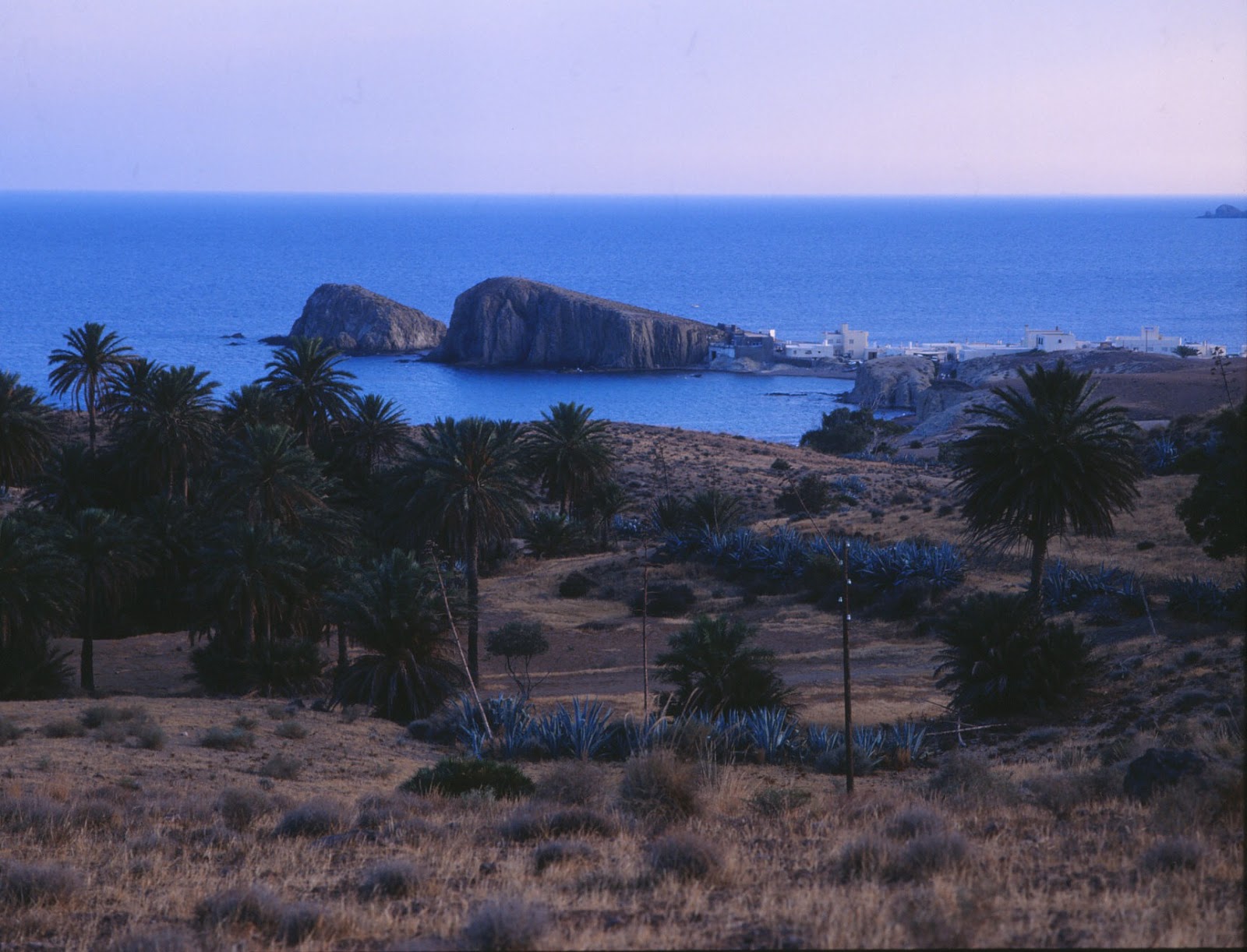
Isleta del Moro, Almeria


Cabo de Gata-Níjar has the best conserved 50 kilometres of coastal cliffs anywhere on the Mediterranean in Europe. Along this stunning coastline with rugged cliffs you will find: town and village beaches such as San José, Las Negras and Aguamarga; magnificent unspoilt beaches such as Mónsul and Los Genoveses; hidden and all but inaccessible coves such as Carnaje and Enmedio; spectacular volcanic and corral cliffs such as Punta de los Muertos and Mesa Roldán. 


Playazo, Almeria


Furthermore, this area has a semi-arid climate with low rainfall and a low water table leading to soils that are poor and underdeveloped but which, nevertheless, are home to one of Europe's most unusual ensembles of flora, with more than 1,000 endemic species. There are areas of palmetto and wolfbane that cling to steep volcanic slopes, dense esparto grass, rosemary and jujube that cover the plains, and, in spring, thousands of daisies that turn the coastal cliffs yellow. They are all examples of plants adapted to the harsh local climatic conditions.

Playa de los Genoveses, Almería

Special mention should be made of the marine ecosystem on account of its variety and abundance. Its marine beds have extensive meadows of posidonea. This plant is similar to green algae, and its proliferation gives rise to real underwater forests that are home to a wide variety of marine fauna: crabs, octopus and fish, including the pen shell, the biggest endangered bivalve in the Mediterranean, considered to be a real natural gem. Buried in the plains of sand and mud there is a wealth of varied fauna - small but vital to the health of the ecosystem as a whole. The rocky sea beds demonstrate extraordinary changes in shape and colour: algae, false corral and a wide variety of fish, including the grouper, also known as "rey del roquedo" (king of the rock fish). Eco-diving in these crystal clear waters is an unforgettable experience. 


Cortijo típico Almeria


Another interesting place, very close to the fishing village of San Miguel, are the Cabo de Gata Salt Pans, home to much of the park's bird life. A multitude of waders such as avocets, black-winged stilts and plovers come to feed in these coastal waters. It is also common to see different species of gulls, ducks and colonies of flamingos. Over the course of the year you can see more than 80 species of birds, either here or at the nearby Rambla Morales delta lagoon, known locally as "Charco". Meanwhile, the Las Amoladeras steppe has esparto grass and thyme plants that provide shelter to a community of birds often hard to see, such as the stone curlew, common lark, short-toed lark and Dupont's lark. Up into the mountains there are birds of prey and small mammals that complete the regional fauna. 


Las Negras, Almeria
Improved infrastructure aiming for sustainable development along with the variety of activities available, such as scuba diving, cycle-touring, boat trips and horse riding routes, will show you all the wealth of this nature area. The fishing village at La Isleta del Moro, the Rodalquilar mining village, the stunning beauty of Los Muertos beach or the incredible cliffs at Los Escullos are all unique experiences awaiting you in these privileged surroundings. 

Pool Casa Cascada, Las Negras

Le Chien Andalous offers various holiday houses and studios in the Cabo de Gata natural park:
In Las Negras, Casa Olivos, Casa Torrecilla, Studios and with pool Casa Palmera and Casa Cascada.
Near San José: the ecologica resort with small houses Finca Albaricoques.  

Source text Cabo de Gata Natural Park: Junta de Andalucia page Medio Ambiente

Saturday, 8 December 2012

The Three Kings came from Andalusia states Pope Benedict XVI

Now Christmas time is arriving and in every village and in every house in Andalusia people will install as usual their belén, or nativity scene. Apart from Maria, Joseph and the baby Jesus, these scenes always go accompanied by the three kings, Baltazar, Melchor and Gazpar bringing their presents to Jesus: gold, mirre and incense.

Baltazar, Gaspar and Melchor in a typical nativity scene
It was thought that these kings came from the far east as many christmas carrols in Spain claim, but now Pope Benedict XVI has stated in his recently published book 'The Childhood of Jesus' that probably these kings came from the region known as Tartessos, believed to be located somewhere in the provinces of Cadiz, Seville and Huelva.

The kings come every year on the eve of th 5th of january at dusk to bring their presents. In some cities they even come on camels or donkeys, but nowadays most of them come on a motorised vehicle. They and their pages throw lots of sweets to all the children attending the parade.


That evening you have to put some anisette for the kings and some hay for the animals on the nativity scene and the shoes of the children, so that the kings can leave their presents there.
The sixth of january is a bank holiday and everybody sits down to enjoy the presents and the 'Roscon de Reyes' a special cake which contains an image of the king or the virgen Mary (which means luck for the coming year) and a bean (which means that you have to pay the 'Roscon' the next year).


Thursday, 22 November 2012

Typical products of Andalusia: Malaga wine


Remember the wines our grandmothers and great grandmothers drank, sipping of very small glasses, and only on very special occasions? This sweet very tasty wine (known as Malaga Dulce) is able to take away all your sorrow, as the famous 'Quitapenas' bodega claims.
Málaga wine began as a deep brown, rich, raisiny wine, created by the Greeks in 600 BC. It was originally called Xarabal Malaguii, "Málaga syrup", and was very sweet. It was created in the Andalucia region of Malaga - close to Cadiz, the region of Sherry.

In 44 AD, Columela wrote about the fine wines available in the Roman Province of Málaga. Its popularity grew. During the 1500s, something had to be done to wine to allow it to last the long ocean journeys. Brandy was added to allow the wine to last longer, and to be more resistant to temperature changes. This is why Málaga is termed a "fortified wine".  It was then one of the most expensive wines of Europe.

Spain now produces 5.8 million gallons of Málaga a year. Málaga is mostly made with the pedro ximinez grape,the wine must actually be aged in the city of Málaga to earn the name. Málaga is regulated by the Consejo Regulador.


The malaga wine is grown inland in all the province of Malaga (Axarquía, Antequera etc), and due to the extremes in temperature: hot and sunny summers and cold but sunny winters the grapes develop the character needed for a fine wine. The predominant variety here is the Pedro Ximenez, which is named after a 17th-century Spanish soldier thought to have introduced it from Germany. It has an exceptionally high sugar content, which is made even higher thanks to the process of letting the grapes roast in the sun before pressing, which reduces their moisture and concentrates the sugar. This partial raisining accounts for traditional Málaga wine's dark colour, for the Moscatel and Pedro Ximenez are both in fact white grapes.
If you want to know more about Malaga wines, remember to visit the Malaga wine museum.

More information about the Bodega Quitapenas: www.quitapenas.es, visits of this bodega are free. The bodega is located in Malaga.

Nice houses in the province of Malaga are:
Ecotourism la Cabra Verde
and in the Antequera region: Casa de la Torre, Casa la Ecina and Casa la Parada, all mentioned houses with their own private pool.  


Wednesday, 7 November 2012

Sierra de las Nieves natural park


The Sierra de las Nieves Natural Park is located at the heart of the natural Serrania de Ronda region, in the province of Malaga. This mountainous area is punctuated by deep ravines and spectacular cliffs, such as La Caína, with a drop of over 100 metres.
Furthermore, the limestone nature of the earth has created a number of potholes, such as the GESM, the world's third deepest at 1,100 metres
The Sierra de  las Nieves natural park is formed by parts of the municipalties of: Ronda, Monda, Tolox, El Burgo, Yunquera, Istán and Parauta

The highest peak is Torrecilla (1,919 metres) in the Sierra Blanca de Tolox.
Its greatest treasure are its conifer forests dating back to the tertiary period, featuring the Spanish fir (the "Pinsapo"), the most unusual species of fir in the world. 

Sierra de las Nieves natural park
Its relief is extremely rugged, with the deep ravines, high cliffs and gorges characteristic of Alpine folding.

Fauna: The area is home to one of Andalusia's largest communities of mountain goat, one of only two wild species of large hoofed mammal native to the Park, the other being the deer.
Other species such as the stag and mountain ox have been brought in, the Park providing them with an excellent habitat. Also to be found here are certain animal species protected by law, such as the wild cat, golden eagle and otter, the latter having practically disappeared from the River Verde.


Flora:
In the mountain peaks, where precipitation and fog are common, large numbers of gall oaks and Spanish firs are to be found.
At lower altitudes the holm oak and cork oak thrive. There are also small collections of madroños, chestnut trees, yews, maples and  ashes.

Points of Interest:
El Torrecilla, Sima GESM, Pinsapo de las Escaleretas, Mirador del Guarda Forestal, Tajo de la Caína. 

   Information source: www.andalucia.org. 

Le Chien Andalous offers here Ecotourism La Cabra Verde, with two nice houses with each their own private pool.

Wednesday, 24 October 2012

Andalusian Recipes 1. Dogfish with potatoes or in Spanish: Cazón con patatas


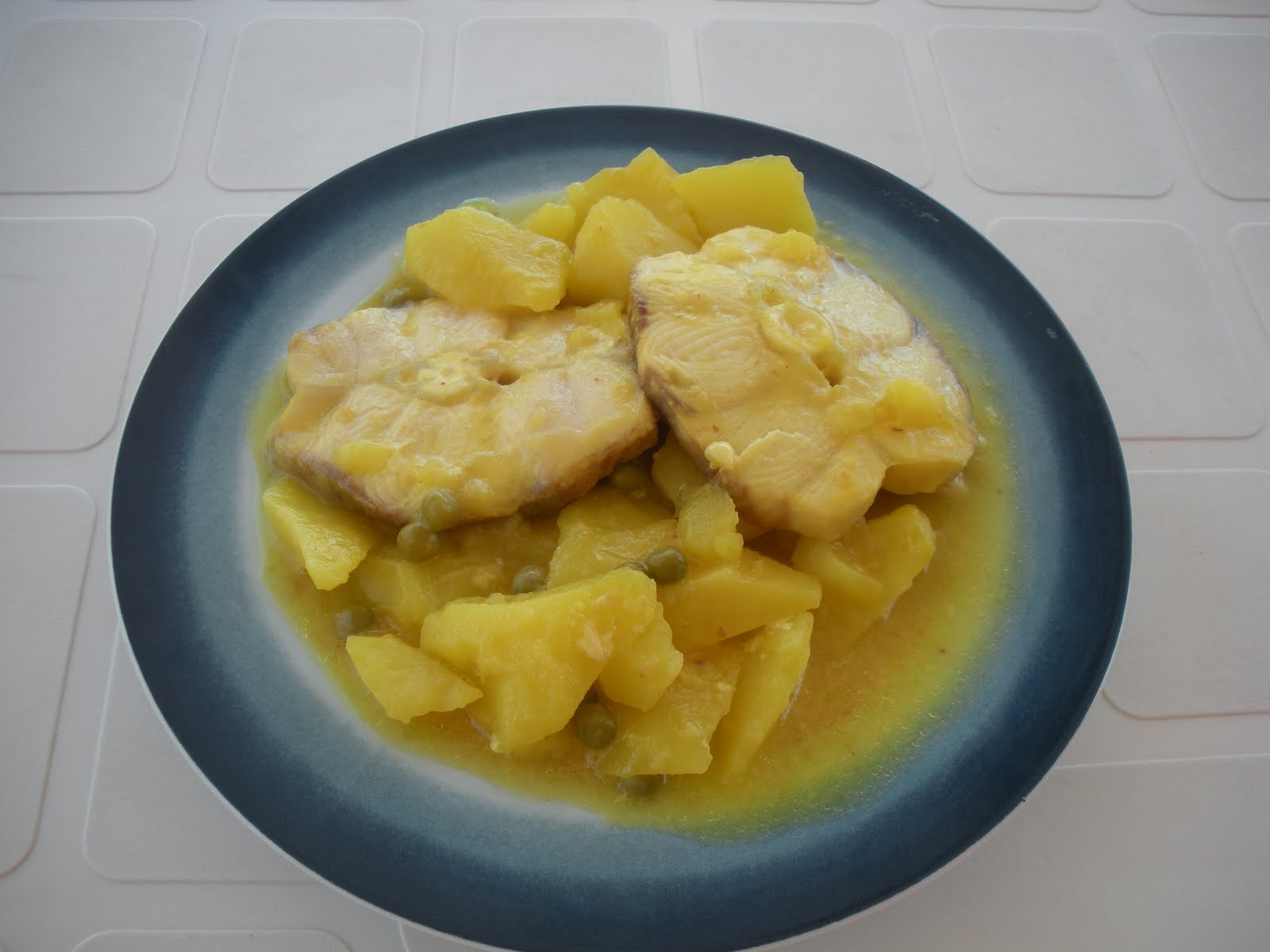
Dogfish with potatoes
One of the easy to made and delicious recipes of Andalusia is Dogfish with potatoes.
The dogfish is normally sold in slices and if you buy half a kilo, have some onions, potatoes, garlic and saffron or colouring powder, you are ready to make this special recipe for 4 people.

Dogfish, Hondshaai, Katzenhai, Chien de Mer
You bake the onion cut in slices in olive oil, half a cup
You cut the potatoes in small chops or in slices and add them to the onions when turning gold.
You bake the potatoes and add some garlic for some 15 minutes, turning and turning around.
You add some water and white wine or sherry (just covering the potatoes) and put the slices of dogfish on top.
Let this cook during 5 minutes, turn around the dogfish (careful) and let it cook for some other 5 minutes.
And: dish ready to be served!
 
Watch the video if you want more instructions and learn some more spanish.


Friday, 5 October 2012

New album Estrella Morente

Flamenco singer Estrella Morente has released a new disc 'Autorretrato' on October 2nd which she inicially started to make with her father Enrique Morente, passed away in december 2010.


The album began to take shape several years ago, when Estrella Morente met up with Michael Nyman in London: “There was a piece that was thirty years old: 'Réquiem'. I go to a book by San Juan de la Cruz and I find the most wonderful poem you could ever read. It fit in perfectly. It was a live musical encounter”. Enrique Morente was the one who linked it to the pregón by Niño de las Moras: “He fell in love with that pregón and we sent it to Michael for him to orchestrate it. It’s the song that opens the disc. It hasn’t been played again”, she says. At the same time as songs started to arise, Estrella Morente began to compose the album’s lyrics and music. “My father boosted my personality, he guided me anew. He didn’t hold back my expression. And that artistic sentiment led me to the self-portrait”, she admits.

Estrella y Enrique Morente

The cantaora defines as “the reflection of an interior” this fourth studio album in her career, which breaks a silent spell of six years without a record, since she released 'Mujeres' in 2006. The repertoire consists of fifteen songs, over and hour of music, which combine roots and innovation. Seguiriyas, pregones, bulerías, old-time sevillanas and pregones, are combined with poems by San Juan de la Cruz, a tribute to Lola Flores, an habanera by Carlos Cano, Caribbean rhythms and a requiem. Musicians such as Paco de Lucía, Vicente Amigo, Tomatito, Antonio, Josemi and Juan Carmona, Pat Metheny and Michael Nyman, among many others, take part on the album, whose directing was concluded by Isidro Sanlúcar following Enrique Morente’s death.

Information from Flamenco World